Why Independent Verification Matters as Lotteries Adopt AI
Read our response to Joseph Cosgriff (see his original article here)
Industry perspective
As AI becomes more integrated into lottery operations, questions about trust and security are gaining new urgency. This makes independent verification of draw results more important than ever.
Joseph Cosgriff, Director of Security at NCEL, raises a timely and important point in his recent La Fleur’s piece, From Randomness to AI: The Next Integrity Challenge in Lottery Systems. His central argument deserves real attention. The industry has traditionally relied on established procedures, controlled access, and trust in the people and systems involved, rather than continuous verification, and AI raises the stakes on that gap.
He’s right that for many lotteries, “trust the system” is still closer to the industry default than many would assume. His use of the Hot Lotto case is a useful reminder of what happens when trust is relied upon in place of independent verification.
From Trust to Independent Verification
The lottery industry has long operated on an inherited assumption: that if you control access to a system tightly enough through locked rooms, designated operators, and separation of duties, you can trust the result it produces. Controlling access to a system and proving what happened inside it are two different things.
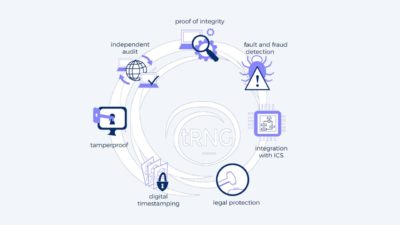
An evidence-based model approaches security differently. Rather than relying primarily on controls around who can access or operate the system, it provides independent evidence that allows the result itself to be verified. The more useful starting point isn’t “can this system be trusted,” it’s “can every result be independently verified.” That shift matters regardless of what’s generating or surrounding the outcome: a mechanical draw, an RNG, or increasingly, an AI-assisted process. Verification doesn’t ask you to take anything on faith. It gives you evidence.
What Independent Verification Means for Lottery Security and AI
Moving from trust to independent verification has important implications both for draw security today and for the industry’s adoption of AI. First, lotteries using evidence-based systems do not have to rely solely on access controls, procedures, or trust in operators to establish the integrity of a draw. Each result can be cryptographically recreated and independently confirmed, independent of who had access or where the system ran.
Second, the ability to verify the result itself is what makes AI adoption safer to reason about. Proof of integrity built into the draw means confidence in the result never depends on the operating model around it. Whether a lottery runs its draw manually, remotely, in the cloud, or with AI woven into automation and oversight, its integrity can still be demonstrated regardless of what else is happening around it.
Looking Beyond the Draw
Having proof doesn’t answer every question AI raises, but it does mean lotteries don’t have to solve AI trust and draw trust as the same problem at the same time. The draw can already stand on its own proof, whatever else the system is asked to do.
Cosgriff is right that AI changes what trust means for lottery systems. For lotteries that have already built proof into the draw, that shift looks less like a new vulnerability to defend against, and more like an opportunity to extend that same principle of verifiability beyond the draw itself.
Frequently asked questions
What is the difference between controlling access to a draw system and verifying its results?
Access controls such as locked rooms, designated operators and separation of duties protect who can reach the system. They don’t prove what happened inside it. Independent verification provides evidence that lets the result itself be checked.
Why does AI raise the stakes for draw integrity?
As Joseph Cosgriff points out, the industry has traditionally relied on procedures, controlled access and trust in the people and systems involved, rather than continuous verification. As AI becomes part of lottery operations, that gap matters more.
What does independent verification of a draw result mean?
Each result can be cryptographically recreated and independently confirmed, no matter who had access to the system or where it ran. It doesn’t ask anyone to take the result on faith; it provides evidence.
Does it matter how or where the draw is run?
When proof of integrity is built into the draw, confidence in the result doesn’t depend on the operating model. The draw’s integrity can be demonstrated whether it runs manually, remotely, in the cloud or with AI involved in automation and oversight.
Does independent verification answer every question AI raises?
No. But it means lotteries don’t have to solve AI trust and draw trust as the same problem at the same time: the draw can stand on its own proof.
Further reading: Cloud Speed, Proven Integrity. by Helena Pereira

About the author
Helena Pereira, Vice President, leads business development and works with vendors and lotteries around the world both in sales and operations capacities. She writes and speaks regularly on RNG standards and best practices.
Related Posts
-

Advancing Secure RNG Technology in the Cloud
October 21, 2026 -

Like Gaming Systems, Draw Systems Need Independent Verification
December 12, 2019 -
![White Paper: Redefining Electronic Draw Security]()
White Paper: Redefining Electronic Draw Security
December 6, 2017 -
![Lessons from Arizona: Redefining Transparency for Lottery Draws]()
Lessons from Arizona: Redefining Transparency for Lottery Draws
November 13, 2017 -
![Lessons from Arizona, Part II: A Solution]()
Lessons from Arizona, Part II: A Solution
October 25, 2017